Beyond the Shape: How Woks and Frying Pans Actually Cook Differently
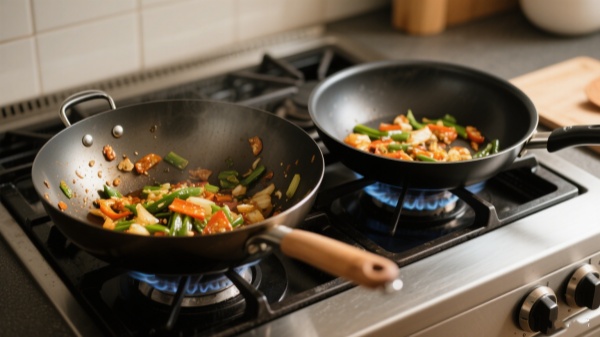
Picture this: you’re standing at the stove, ready to cook. In your left hand is the deep, embracing curve of a wok; in your right, the wide, level plane of a frying pan. Tonight’s menu features a sizzling beef stir-fry and a perfectly seared salmon. Which tool do you reach for? This is more than a choice of cookware—it’s a choice of cooking philosophy.
Many people assume the difference is simply a matter of a round bottom versus a flat one. But that fundamental design element creates a cascade of differences, dictating everything from heat distribution and cooking technique to the final flavor of your dish. It’s the difference between a nimble specialist and a steadfast all-rounder.
In this guide, we’ll move beyond the surface to explore the science and art behind the wok and the frying pan. By the end, you won’t just know the difference; you’ll have the confidence to choose the perfect stage for every culinary performance.
The Quick-Look: Core Differences at a Glance
For those in a hurry, this table breaks down the essential distinctions between these two kitchen titans.
| Feature | Wok | Frying Pan (Skillet) |
|---|---|---|
| Shape | Bowl-shaped with high, sloping sides. | Flat bottom with low, straight or gently sloped sides. |
| Heat Distribution | Heat is concentrated at the very bottom, creating cooler zones up the sides. | Heat spreads evenly across the entire flat surface. |
| Best For | Stir-frying, deep-frying, steaming, smoking. | Searing, pan-frying, sautéing, baking. |
| Food Movement | Designed for tossing and rapid movement of ingredients. | Provides a stable surface for maximum contact and even browning. |
| Oil Consumption | Requires less oil for deep-frying as the shape creates depth. | Requires enough oil to coat the entire flat bottom. |
| Key Advantage | Achieves “Wok Hei” (a unique, smoky flavor). | Creates a perfect Maillard Reaction (a deep, even sear). |
A Deeper Dive: The Four Fundamental Differences
1. The Philosophy of Design: Agile Bowl vs. Stable Plane
A wok’s bowl shape is a marvel of dynamic design. It naturally funnels food towards the intense heat source at the center, while the high, sloping walls make it easy to toss and turn ingredients with a flick of the wrist. It’s a design built for speed and constant motion.
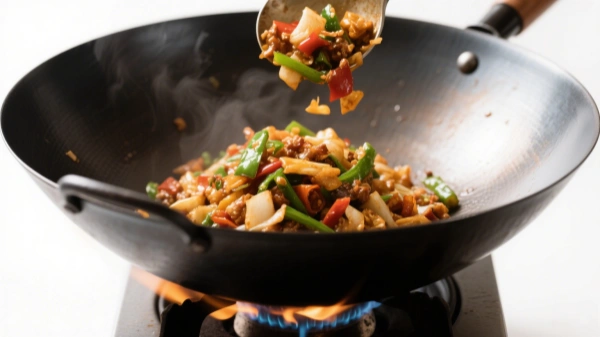
A frying pan, on the other hand, is built for stability and precision. Its flat bottom provides the largest possible contact area between the food and the heat. The low walls make it easy to get a spatula underneath a delicate fish fillet or a pancake. It’s a design that values control and evenness.
2. The Art of Heat: A Dance of Flames vs. a Uniform Embrace
This is where the magic happens. A wok creates distinct heat zones. The bottom is a scorching-hot inferno for searing, while the sloping sides provide cooler areas where ingredients can rest, cook through gently, or wait their turn to be returned to the action. I’ve found this is the real secret to restaurant-quality stir-fries, allowing a chef to manage multiple ingredients at different cooking stages simultaneously.
A frying pan chases a different ideal: perfectly uniform heat. This ensures that two steaks placed side-by-side will cook at the same rate, developing a consistent, edge-to-edge crust. It’s this predictable, even heat that makes it the king of the sear.
3. The Technique Showdown: Wok Hei vs. the Maillard Reaction
At their best, each pan unlocks a unique and coveted culinary reaction.
- The Wok’s Domain: Stir-Frying & Wok Hei
Wok Hei, “the breath of the wok,” is that elusive, smoky, slightly charred flavor that defines great stir-fried food. It’s created when tiny droplets of oil and food juices hit the intensely hot metal, vaporize, and infuse the ingredients. This requires the dynamic heat and tossing motion that only a wok can provide. - The Frying Pan’s Masterstroke: Searing & the Maillard Reaction
The Maillard reaction is the chemical process between amino acids and sugars that gives browned food its distinctive flavor. Think of the deep brown crust on a perfectly cooked steak. A frying pan’s broad, flat surface is the ultimate platform for maximizing this reaction, creating unparalleled flavor and texture. 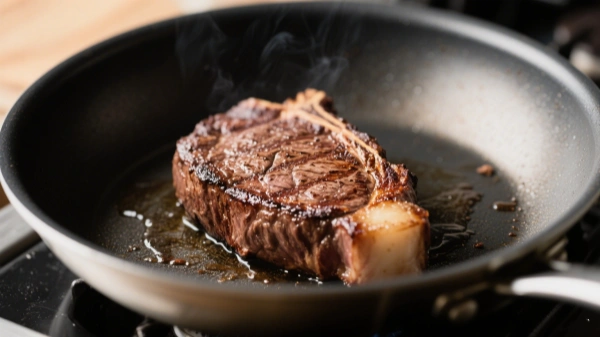
4. Materials & Maintenance: A Ritual of Seasoning vs. Modern Convenience
Traditional woks, typically made of carbon steel, require a ritual of “seasoning”—building up a natural non-stick patina over time. It’s a rewarding process that connects the cook to their tool.
Frying pans offer a universe of materials: durable stainless steel, convenient non-stick, and heat-retaining cast iron. Their maintenance varies, but they generally align with modern, low-fuss kitchen routines.
The Burning Question: Can One Truly Replace the Other?
I’ve been asked this countless times, and my answer is always a respectful “no.” They are specialists with different missions.
What happens if you stir-fry in a frying pan?
You’ll likely end up steaming your food. When you add ingredients to a frying pan, the temperature drops across its entire surface. The food releases moisture that gets trapped, resulting in soggy vegetables instead of crisp-tender ones. I once tried to make a proper Kung Pao Chicken in a skillet; the result was sadly stew-like, completely missing the fiery, seared essence of the dish.
And what about searing a steak in a wok?
You’ll struggle. Only the small, central bottom of the wok gets hot enough for a good sear, meaning you can’t get an even crust on a large piece of meat. The high walls can also trap steam, hindering the browning process.
Buying Guide: Which Pan Belongs in Your Kitchen?
This isn’t about which pan is “better,” but which is better for you.
You Should Choose a Wok if…
- You’re passionate about Asian cuisine and want to create authentic stir-fries.
- You enjoy deep-frying and want to do it with less oil.
- You have a powerful gas stove that can truly embrace a wok’s shape (though flat-bottom woks work great on electric/induction).
You Should Choose a Frying Pan if…
- Your cooking leans towards Western styles: searing meats, cooking eggs, sautéing vegetables.
- Achieving a perfect, even crust on proteins is a top priority for you.
- With the wide variety of frying pan sizes, from a personal 8-inch to a family-sized 12-inch, you value having the precisely right tool for any quantity.
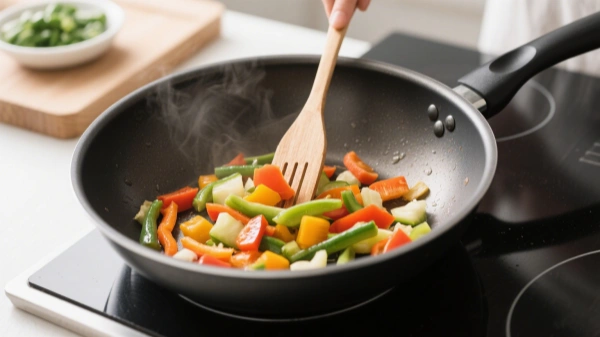
The Real Answer: “I’ll Take Both!”
For any serious home cook, this isn’t an either/or dilemma. A high-quality carbon steel wok and a dependable 10- or 12-inch frying pan (be it stainless steel or cast iron) form the foundation of a truly versatile kitchen. They don’t compete; they complete each other.
Frequently Asked Questions (FAQ)
What is the main advantage of a wok over a frying pan?
A wok’s primary advantage is its unique bowl shape, which concentrates heat at the bottom for rapid, high-heat stir-frying and creates the signature ‘wok hei’ flavor that’s nearly impossible to replicate in a flat pan. Its high, sloping sides also make tossing food easy and efficient.
Is it worth buying a wok if I have an electric stove?
Yes, it can be, but you must choose a flat-bottom wok. While it won’t perfectly replicate the heat dynamics of a round-bottom wok on a gas flame, its high sides and heat-focusing shape are still superior for stir-frying compared to a standard frying pan.
What’s the difference between a round-bottom and flat-bottom wok?
A round-bottom wok is the traditional design, requiring a special wok ring to sit on a gas stove, and it offers the most concentrated heat. A flat-bottom wok is a modern adaptation designed to work on flat electric and induction cooktops, offering greater stability and versatility in modern kitchens.
Conclusion: Not Better, Just Different
There is no winner in the “wok vs. frying pan” debate, only a deeper understanding. They are not rivals, but distinct masters of their craft, each designed to bring out the best in different foods and techniques.
To understand your tools is to elevate your cooking. I hope that the next time you stand at your stove, you’ll reach for your pan not out of habit, but with the confidence of knowing you’ve chosen the perfect stage for the delicious meal you’re about to create.

Solamex — Wholesale Pots and Pans Expertise
Solamex offers wholesale pots and pans, combining durable materials, precise craftsmanship, and flexible product customization. From premium stainless steel to advanced nonstick lines, our catalog is built for both retail distribution and demanding commercial kitchens — ensuring consistency in performance and presentation.
Choosing Between a Wok and a Frying Pan — Practical Advice for Home Cooks
How to Clean a Wok: From Seasoning to Rust Removal