Anodized vs. Ceramic Cookware: The Honest Breakdown for 2025
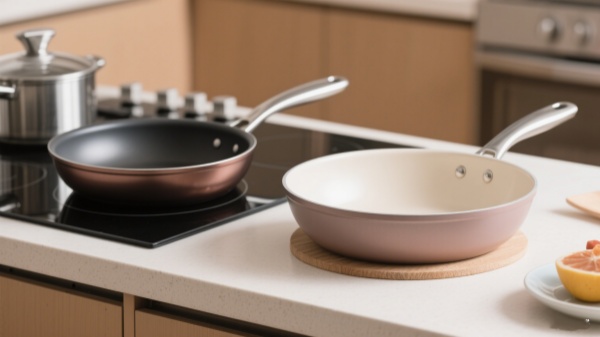
Stepping into the cookware aisle can feel overwhelming. Two terms that get thrown around constantly are ‘hard-anodized’ and ‘ceramic’. They both look sleek, promise effortless cooking, and claim a spot in your healthy kitchen. But what’s the real story behind the marketing buzz? Which one truly deserves your hard-earned money?
If you’ve ever felt stuck between these two choices, you’re in the right place. This isn’t just another technical spec sheet. We’re going to break down the real-world differences in health, cooking performance, durability, and overall value to help you finally decide. Let’s settle the anodized vs. ceramic debate once and for all.
What Exactly Are We Talking About?
Before we pit them against each other, let’s quickly demystify what these materials actually are. Understanding the “how” makes the “why” so much clearer.
Let’s Talk Ceramic: More Than Just Clay
First things first: a ceramic pan isn’t a solid piece of pottery. Think of it as a metal pan (usually aluminum) wearing a special, non-stick jacket. This “jacket” is a silica-based gel (derived from sand) that’s sprayed on and cured with heat. This process is called sol-gel technology.
Its biggest claim to fame? It’s completely free of Polytetrafluoroethylene (PTFE) and Perfluorooctanoic acid (PFOA), the chemicals often associated with traditional non-stick pans. Sounds perfect, right? But the real question is, how long can that perfect, slippery surface last?
And What About Hard-Anodized? The Science Bit, Made Simple
Hard-anodized cookware is a different beast altogether. It’s not a coating, but a transformation. An aluminum pan undergoes an electrochemical process that builds a super-hard, non-reactive layer of aluminum oxide on its surface. This surface is part of the pan itself—it can’t peel or chip off.
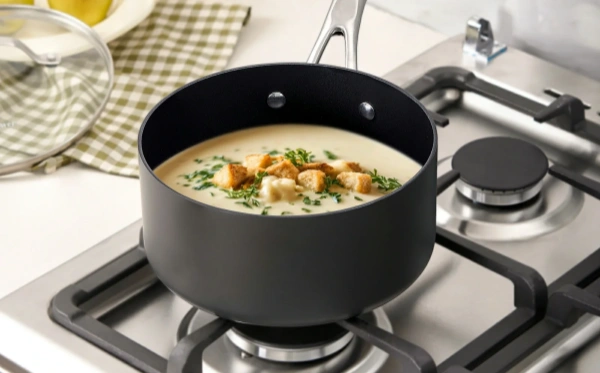
Here’s the crucial point many people miss: Most hard-anodized pans are sold as non-stick, which means they also have a non-stick coating on the inside cooking surface. This coating can be traditional PTFE or even a ceramic one. So, the comparison is often between a standard aluminum pan with a ceramic coating versus a highly durable, anodized aluminum pan with its own non-stick coating.
The Head-to-Head Battle: 5 Key Areas of Comparison
Alright, theory’s over. Let’s see how they stack up in the scenarios that matter most in your kitchen day-in and day-out.
Round 1: Cooking Performance & Non-Stick Capability
- Ceramic: Out of the box, ceramic non-stick is simply brilliant. Eggs slide around like they’re on an ice rink, requiring little to no oil. It’s fantastic for delicate foods. However, this honeymoon phase doesn’t last forever. The non-stick properties tend to degrade noticeably over time, especially with frequent use and high heat.
- Hard-Anodized: The core strength here is heat distribution. The anodized aluminum body heats up incredibly fast and evenly, eliminating frustrating hot spots. Its non-stick performance depends on the quality of the interior coating, but a high-quality PTFE coating on an anodized pan will generally retain its slickness for longer than a ceramic one.
The Takeaway: For initial non-stick magic, ceramic wins. For superior heat control and more durable non-stick performance, a quality hard-anodized pan takes the crown.
Round 2: Health & Safety: The Big Question
- Ceramic: This is ceramic’s strongest selling point. It contains absolutely no PTFE, PFOA, lead, or cadmium. For anyone with a firm “no-PTFE” policy in their kitchen, ceramic offers complete peace of mind, as long as you use it over low to medium heat.
- Hard-Anodized: The anodized body itself is inert, non-reactive, and perfectly safe. The question again boils down to the interior coating. If it’s a PTFE-based coating, it’s safe as long as you don’t overheat it above 500°F (260°C), which you shouldn’t be doing with any non-stick pan anyway. Overheating can cause the coating to release fumes.
The Takeaway: If you are absolutely risk-averse regarding PTFE, ceramic is your clear choice. If you’re a careful cook who doesn’t use extreme heat, both options are perfectly safe.
Round 3: Durability & Lifespan
- Ceramic: Let’s be blunt: this is ceramic’s Achilles’ heel. The coating is relatively brittle. It’s prone to scratches from metal utensils and can chip if dropped. More importantly, its non-stick function has a limited lifespan, often degrading within a year or two, forcing a replacement.
- Hard-Anodized: The pan’s body is built like a tank. The hard-anodized surface is harder than stainless steel and incredibly resistant to scratches and corrosion. While the interior non-stick coating will eventually wear down, the pan itself will last for many, many years.
The Takeaway: It’s no contest. Hard-anodized cookware is vastly more durable and offers a much longer lifespan.
Round 4: Cleaning & Maintenance
When they’re new, both are a dream to clean—a simple wipe is often enough. The maintenance rules are also similar: avoid metal utensils, abrasive scouring pads, and sudden temperature changes (like putting a hot pan in cold water). While some are labeled “dishwasher safe,” handwashing is always recommended to prolong the life of any non-stick surface.
A small downside for ceramic is that lighter-colored coatings can stain over time from things like tomato sauce or curries.
Round 5: Price & Value for Money
- Ceramic: You can find ceramic pans at a wide range of price points, including very budget-friendly options. They offer a low initial investment. However, considering you might need to replace them every couple of years, the long-term cost can add up.
- Hard-Anodized: These pans typically sit in the mid-to-high price range. The upfront cost is higher, but you’re paying for superior construction, better heat performance, and a much longer-lasting piece of equipment. It’s an investment in a kitchen workhorse.
The Takeaway: Ceramic is the budget-friendly short-term solution. Hard-anodized offers far better long-term value.
The Final Verdict: Which One Should You Choose?
There’s no single “best” pan, only the one that’s best for you. It all comes down to your cooking style, priorities, and budget.
Choose Ceramic If…
- You are strictly avoiding PTFE/PFOA for health reasons.
- You primarily cook on low-to-medium heat (e.g., eggs, pancakes).
- You don’t mind replacing your non-stick pan every 1-2 years.
- You love the bright, colorful design options many ceramic lines offer.
Choose Hard-Anodized If…
- You are a passionate home cook who values performance and even heating.
- You want a durable, long-lasting pan that can handle daily use.
- You see your cookware as a long-term investment.
- You want a versatile pan that can sear, sauté, and simmer with precision.
Conclusion
The choice between ceramic and hard-anodized cookware is a classic trade-off: the immediate, PTFE-free appeal of ceramic versus the robust, long-term performance of hard-anodized. Ceramic is the vibrant, health-conscious sprinter, while hard-anodized is the dependable, marathon-running champion.
A smart approach? Consider having both. A small ceramic skillet can be perfect for your morning eggs, while a larger hard-anodized sauté pan can handle the heavy lifting for dinner. Ultimately, understanding their true nature empowers you to choose the right tool for the job. What’s your experience been? Let us know in the comments below!

Solamex — Wholesale Pots and Pans Expertise
Solamex offers wholesale pots and pans, combining durable materials, precise craftsmanship, and flexible product customization. From premium stainless steel to advanced nonstick lines, our catalog is built for both retail distribution and demanding commercial kitchens — ensuring consistency in performance and presentation.
Dutch Oven Sizes Explained: Quarts, Inches, And Which One To Buy
Anodized vs Ceramic Cookware — Which Should You Buy?