5-Ply vs. 3-Ply Stainless Steel: The Definitive Guide for 2025
Stop staring at the labels. We’ll break down the real-world differences to help you invest in the perfect pan for your kitchen.
You’re standing in the cookware aisle, faced with a wall of gleaming stainless steel. Two pans look almost identical, but one is labeled “3-Ply” and the other “5-Ply.” The price difference is obvious, but is the performance gap really worth the extra cash? It’s a common point of confusion for anyone looking to invest in quality cookware.
This guide will go beyond the marketing jargon. We’ll dive into the science behind the layers, compare 5-Ply vs. 3-Ply Stainless Steel Cookware in real-world cooking scenarios, and give you a clear, personalized framework for making a confident decision. Our goal is simple: to ensure every dollar you spend on cookware is a smart investment in your culinary future.
Based on years of cooking experience and a deep dive into material science, let’s uncover the secrets hidden between the layers of steel.
The Fundamentals: What Exactly is “Ply”?
First, let’s get the terminology straight. “Ply,” also known as “cladding,” refers to the process of bonding different layers of metal together to form a single sheet. This sheet is then formed into a pot or pan.
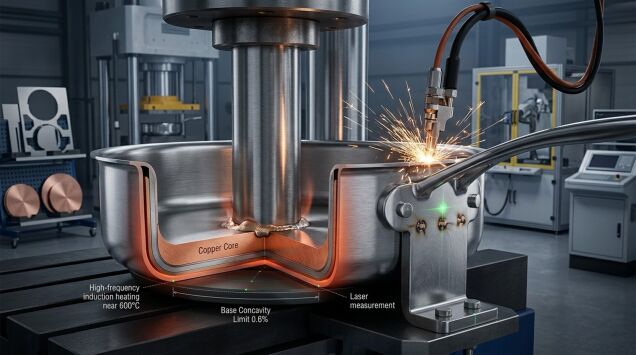
But why is this necessary? While stainless steel is prized for its durability, non-reactivity with food, and easy cleanup, it has one major flaw: it’s a poor conductor of heat. Cooking in a pan made of only stainless steel would result in hot spots and unevenly cooked food. To solve this, manufacturers sandwich a highly conductive core material—most commonly aluminum or copper—between layers of stainless steel.
Think of it like a high-performance sandwich: the stainless steel is the durable, easy-to-clean bread, while the aluminum core is the delicious filling that spreads heat quickly and evenly from edge to edge.
Deep Dive into 3-Ply: The Workhorse of the Kitchen
A 3-ply construction is the industry standard for high-quality stainless steel cookware and represents a massive leap in performance from non-clad pans.
How It’s Made
The typical structure is simple and effective:
- Layer 1 (Cooking Surface): Non-reactive 18/10 stainless steel.
- Layer 2 (Core): A thick layer of aluminum for excellent heat conduction.
- Layer 3 (Exterior): Magnetic stainless steel, making it induction-compatible.
Pros & Cons of 3-Ply
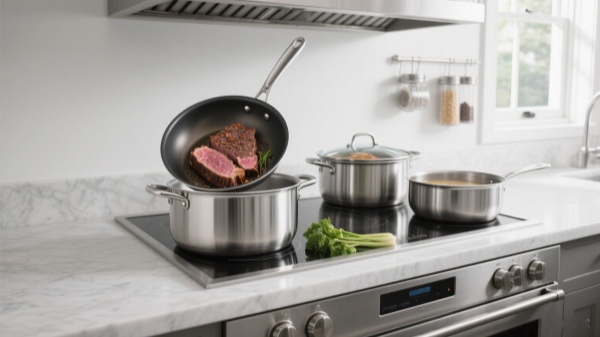
✓ The Efficient All-Rounder: Heats quickly and distributes heat well enough for over 90% of home cooking tasks, from searing a steak to sautéing vegetables.
✓ Lightweight & Agile: The reduced weight makes it easier to handle, flip food, and clean.
✓ The Value King: Offers the best balance of performance and price, making it an accessible entry point into premium cookware.
✗ Minor Hot Spots: Compared to top-tier 5-ply pans, it can be slightly more prone to hot spots, requiring a bit more attention when making delicate sauces.
Deep Dive into 5-Ply: Precision and Professional Performance
5-ply cookware takes the same concept and enhances it, adding extra layers designed to further refine heat control and distribution.
How It’s Made
The construction is more complex, often looking something like this:
- Layer 1: 18/10 Stainless Steel
- Layer 2: Aluminum
- Layer 3: A core of Copper or another layer of Aluminum
- Layer 4: Aluminum
- Layer 5: Magnetic Stainless Steel
The extra layers of conductive material work to buffer and spread the heat even more meticulously, creating an incredibly uniform cooking surface.
Pros & Cons of 5-Ply
✓ Unparalleled Heat Distribution: Drastically reduces hot spots. The temperature from the center of the pan to the rim is remarkably consistent.
✓ Superior Temperature Control: It’s more responsive to changes in burner output, giving you precise control for sensitive tasks. It also retains heat better.
✓ Professional-Grade Feel: The heft and flawless performance inspire confidence in the kitchen.
✗ Significantly More Expensive: This level of engineering comes at a premium price.
✗ Heavier: The extra layers add noticeable weight, which can be a drawback for some users.
Head-to-Head: The Ultimate Comparison
The spec sheets are one thing, but how do these differences play out in the kitchen? This table breaks it down.
| Feature | 3-Ply Stainless Steel | 5-Ply Stainless Steel | The Bottom Line |
|---|---|---|---|
| Heat Distribution | Good | Excellent | 5-ply has fewer hot spots, making it more forgiving. |
| Heating Speed | Faster | Slightly Slower | 3-ply gets up to temperature quicker due to less mass. |
| Responsiveness | Good | Exceptional | 5-ply reacts more precisely to heat changes, preventing scorching. |
| Weight | Lighter | Heavier | A key ergonomic factor for everyday use. |
| Price | $$ (More Affordable) | $$$$ (Premium) | Budget is often the deciding factor. |
| Best For | Everyday cooking, high-value performance seekers. | Passionate foodies, precision cooking, professionals. | Choose based on your specific cooking style. |
Making Your Choice: Which One Should You Actually Buy?
There is no single “best” pan—only the pan that’s best for you. Here’s our recommendation based on your cooking style.
Choose 3-Ply If…
- You are an everyday home cook whose repertoire includes searing, frying, boiling, and sautéing.
- You’re upgrading from non-stick for the first time and want a massive performance boost without breaking the bank.
- You value lighter, more manageable cookware for daily tasks.
- You believe in the “80/20 rule”—getting 80% of the performance for 20% of the price of the absolute top tier.
Choose 5-Ply If…
- You are a passionate cooking enthusiast or professional who loves tackling complex recipes.
- You frequently make delicate sauces, custards, or candies that demand precise temperature control.
- You want the absolute best-in-class performance and are willing to invest in it.
- You are not bothered by heavier cookware and appreciate the feeling of solid, professional-grade equipment.
One Critical Rule: A premium, well-made 3-ply pan from a reputable brand will always outperform a poorly constructed 5-ply pan from an unknown manufacturer. Quality of materials and construction trumps the layer count alone.
Beyond the Plies: 3 Other Factors to Consider
The ply count is important, but it’s not the whole story. Don’t forget to check these details before you buy:
- Core Material: While most clad cookware uses an aluminum core, some high-end lines use copper. Copper is a slightly better thermal conductor than aluminum but comes at a significantly higher price and adds weight. For most, aluminum provides more than enough performance.1
- Handle Design: Is the handle comfortable to hold? Does it stay relatively cool on the stovetop? Is it securely attached with sturdy rivets? A great pan with a bad handle is a frustrating tool.
- Brand & Craftsmanship: Reputable brands like All-Clad, Made In, and Demeyere have spent decades perfecting their craft. This translates to better-finished rims (for drip-free pouring), perfectly balanced weight, and long-term durability backed by solid warranties.

Solamex — Wholesale Pots and Pans Expertise
Solamex offers a comprehensive range of wholesale pots and pans, combining durable materials, precise craftsmanship, and flexible product customization. From premium stainless steel to advanced nonstick lines, our catalog is built for both retail distribution and demanding commercial kitchens — ensuring consistency in performance and presentation.
What “18/10” Means For Stainless Steel Cookware — Composition, Performance & Buying Guide
5-Ply vs 3-Ply Stainless Steel Cookware: Which One Should You Buy?