Can Stainless Steel Go in the Dishwasher?
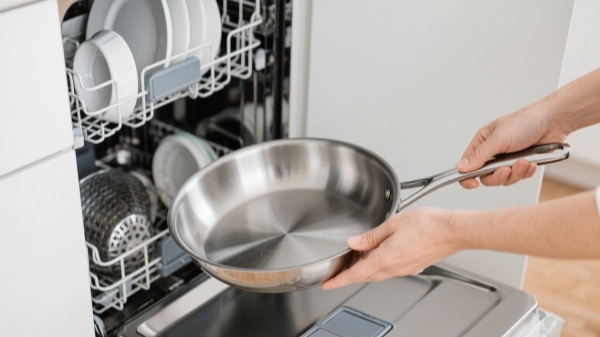
Short answer: Yes — most uncoated stainless-steel items can be washed in a dishwasher, but that “yes” comes with important caveats about alloy grade, finishes, handles and how often you run the machine. Read this practical guide to decide, avoid common damage, and learn quick fixes when things look dull or spotted.
Quick summary: when it’s safe — and when it isn’t
- Safe, usually: Solid stainless-steel flatware, plain stainless pots and pans without wooden handles, and stainless bakeware (check manufacturer label).
- Avoid the dishwasher for: High-carbon knives, cast iron, uncoated aluminum, wooden handles, glued or hollow-handled items, and anything with decorative decals or gold/silver trim.
- Watch out for: Hard water spots, rainbow discoloration, and dulling over many cycles — especially on lower-grade or brushed finishes.
Tip: Treat “dishwasher safe” as permission, not an invitation. If an item is important to you — an heirloom pan or a pro chef’s knife — hand-wash to preserve function and finish.
How stainless steel behaves in the dishwasher — the short chemistry
Stainless steel resists rust because it forms a thin layer of chromium oxide on the surface; that layer is what we call “passivation.” Nickel, when present, helps preserve shine and makes the alloy more corrosion-resistant. But the dishwasher is an aggressive environment: hot water, alkaline detergents, prolonged wet cycles and mineral-rich rinse water all test that thin oxide layer.
Two common cosmetic issues you will see after repeated machine cycles are water spotting (mineral deposits from hard water) and rainbowing (thin-film interference that looks like a faint rainbow). These usually affect appearance rather than structure, but pitting and dulling can occur on cheaper alloys or when salts/acidic residues are left to sit.
Bottom line: stainless steel is resilient — but not invincible. How it fares depends on the alloy, the finish, and how the dishwasher is used.
Grades & finishes: which stainless steels survive dishwashers best
What the numbers mean (18/10, 18/8, 18/0)
The common markings on flatware and cookware — for example, 18/10 — refer to the percentages of chromium and nickel: 18% chromium, 10% nickel. More nickel generally means better corrosion resistance and a brighter finish. So 18/10 typically stands up better to repeated dishwasher cycles than 18/0 (no nickel), particularly in homes with hard water.
Finish: mirror vs brushed
A mirror (high-polish) finish hides some spotting, while a brushed (matte) finish masks scratches but shows mineral residue more clearly. If you plan to rely on the dishwasher, a higher-nickel mirror finish will usually look better for longer.
Clad and bonded pans
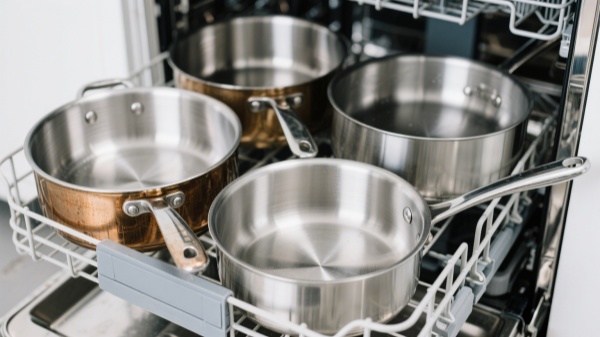
Multi-ply or clad stainless steel pans combine stainless with a core of aluminum or copper for heat performance. The exterior stainless layer may be thin on some budget pans — repeated dishwasher exposure can reveal or accelerate wear at seams, rivets, or where the cladding bond is imperfect. For long life, follow the manufacturer’s guidance.
Which kitchen items shouldn’t go in the dishwasher — and why
- High-carbon or specialty knives. The combination of detergent, heat and agitation dulls edges; it can also cause spotting or pitting at the blade if salts remain in the machine.
- Cast iron. Strips seasoning; promotes rust.
- Uncoated aluminum. Often discolors and may react with detergents.
- Wooden handles or utensils. Heat and repeated wetting crack, swell or loosen glue joints.
- Nonstick pans with fragile coatings (high-quality ceramic and granite coated cookware can often be used in the dishwasher). Abrasive detergents and high heat shorten coating life.
- Decorative or plated pieces. Gold/silver trim and decals wear off or dull in the dishwasher.
Even if an item “survives” the dishwasher, expect accelerated cosmetic wear. When the item is costly or chosen for a specific finish, hand-wash to preserve appearance and function.
Reading labels & manufacturer care instructions — practical checks
Labels and manuals often say “dishwasher safe,” but cookware manufacturers sometimes qualify that statement for particular cycles or detergents. A few practical checks before loading:
- Look for specifics: “dishwasher safe — top rack only” or “hand-wash recommended for best results.”
- Check for mixed materials: a stainless bowl with a wooden handle is a no-go.
- For B2B buyers: ask suppliers for a product spec sheet that lists alloy grade, finish type and results of any wash-cycle testing.
Practical loading & detergent tips if you do use the dishwasher
Follow these habits to reduce damage and spotting:
- Separate stainless from other metals (especially aluminum and cast iron) to avoid staining from galvanic interactions.
- Avoid high-alkaline or industrial-strength detergents when possible. Use standard dishwasher detergent and consider a milder option if you notice spotting.
- Choose lower-heat or “eco” cycles for regular items; reserve heavy cycles for heavily soiled cookware only.
- Use a rinse aid to reduce mineral deposits in hard-water areas.
- Open the door after the cycle for faster drying, which limits standing moisture on flatware and pans.
Pro tip: If your water is especially hard, occasional hand-washing prevents repeated mineral buildup that leads to permanent spotting.
Troubleshooting: stains, rainbowing and white spots — how to fix them
Most discoloration is cosmetic and fixable at home. Try these steps in order from gentlest to stronger methods:
- Vinegar soak: Wipe or soak the affected area in white vinegar for 10–15 minutes, then rinse.
- Baking soda paste: Mix baking soda with a little water to make a paste, rub gently with a soft cloth, rinse and dry.
- Non-abrasive stainless cleaner: Use according to product instructions; avoid steel wool or harsh scrubbing pads that scratch the finish.
If pitting or flaking appears after cleaning, the damage may be structural — stop using the item for food preparation and consult the manufacturer.
Decision matrix — a quick selector
| Item | Common grade / concern | Recommended action |
|---|---|---|
| Everyday flatware | 18/10 or 18/8 | Dishwasher OK; separate from low-grade metals |
| Chef knives | High-carbon or laminated steel | Hand-wash only |
| Multi-ply pan (stainless exterior) | Clad: watch seams/rivets | Occasional dishwasher OK; hand-wash for longevity |
| Wood-handled utensils | Glue & wood | Hand-wash |
| Decorative or plated serveware | Trim/decals | Hand-wash |
FAQ
Can stainless-steel pots go in the dishwasher?
Generally yes for plain stainless pots. If there’s a wooden handle, special finish or bonded layers, follow the manufacturer’s instructions.
Is stainless-steel cutlery dishwasher safe?
Often yes — but to avoid spotting and edge wear, load cutlery so pieces do not touch and dry promptly.
Will the dishwasher ruin stainless-steel pans?
Only over time. Repeated exposure can dull the finish and expose weaknesses in cheaper bonded pans. Hand-washing extends cosmetic life.
Can I put stainless-steel knives in the dishwasher?
No — avoid it to keep blades sharp and handles secure.
How do I remove rust or brown spots from stainless steel after dishwasher use?
Start with white vinegar or a baking soda paste, then move to dedicated stainless cleaners if needed. Stop using items that show structural pitting.
Does stainless steel discolor in hard water after dishwasher use?
Yes — minerals cause white film and spotting. Use rinse aid or lower-heat cycles, and clean spots with vinegar.

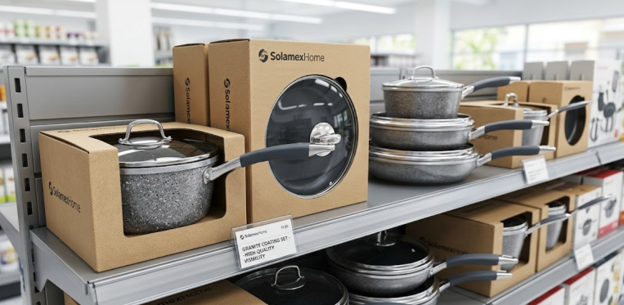
Solamex — Wholesale Pots and Pans Expertise
Solamex offers wholesale pots and pans, combining durable materials, precise craftsmanship, and flexible product customization. From premium stainless steel to advanced nonstick lines, our catalog is built for both retail distribution and demanding commercial kitchens — ensuring consistency in performance and presentation.
Can Stainless Steel Go in the Dishwasher? The Complete Guide to Safe Cleaning
Granite vs. Ceramic Cookware: The 2025 Honest Comparison