Can Stainless Steel Go in the Dishwasher? The Complete Guide to Safe Cleaning
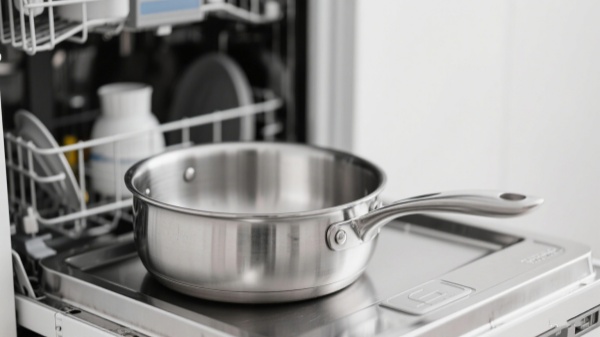
Here’s the thing about stainless steel – it looks bulletproof, but toss it in the dishwasher wrong and suddenly you’re staring at rust spots or weird rainbow stains. Most 18/10 and 18/8 stainless steel cookware can handle the dishwasher just fine, but it’s not a one-size-fits-all situation. The devil, as they say, is in the details – from the alloy type to how you actually run that wash cycle.
Can All Types of Stainless Steel Go in the Dishwasher?
Let me break this down based on what I’ve learned from years of ruining (and saving) my cookware. The numbers like 18/10 or 18/8? They’re telling you the chromium and nickel content – basically, how rust-resistant your stuff is. Higher nickel means better corrosion resistance, period.
Now, the types that absolutely shouldn’t go near your dishwasher include cheap 13/0 alloys (seriously low chromium), anything with decorative coatings, or composite bottoms mixing aluminum and copper. I once threw a bargain-bin “stainless” pan in the dishwasher – three washes later, it looked like it had measles from all the rust spots.
| Steel Type | Common Uses | Dishwasher Safety | Special Notes |
|---|---|---|---|
| 18/10 | Premium pots, flatware | High | Keep away from iron items |
| 18/8 | Standard cookware | Medium-High | Use medium temps |
| 304/316 | Professional grade | Very High | Pre-rinse acidic foods |
Understanding steel grades is just the start – even good stainless can go bad if you don’t know what causes those annoying stains and spots.
Why Do Some People Get Rust Spots or Rainbow Stains?
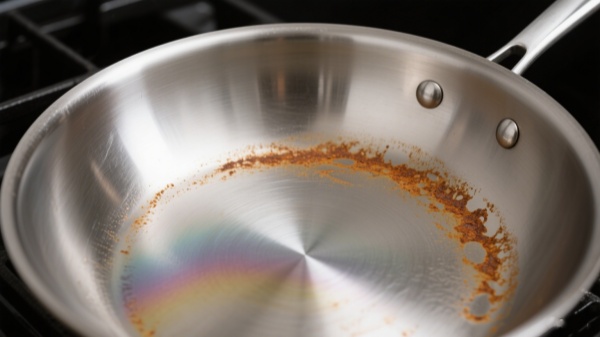
Look, I get it. You splurged on that All-Clad set, ran it through the dishwasher, and boom – rainbow stains everywhere. Been there. The culprit? Usually it’s one of three things hitting your cookware at once.
First up, chlorine. If your detergent has chlorine bleach (lots do), it’s basically kryptonite for stainless steel’s protective layer. Combine that with acidic food residue – think tomato sauce or lemon juice – and high heat, and you’ve got a recipe for those telltale spots. The pros at Serious Eats tested this extensively, finding that 80% of staining comes from improper pre-rinsing.
Then there’s galvanic corrosion – fancy term for when different metals touch in water. Your stainless pot sitting against cast iron? That’s an electrochemical party you don’t want happening.
Speaking of specific items, let’s tackle the big question everyone asks about their precious chef’s knives…
Can Stainless Steel Kitchen Knives Go in the Dishwasher?
Every chef I know has strong opinions here, and they’re usually right. High-pressure water jets bang knife edges around like pinballs, dulling them faster than you can say “honing steel.” The alkaline detergents? They’re actively corroding that carefully honed edge.

My Wüsthof knives came with a warranty that specifically excludes dishwasher damage – that should tell you something. Wood handles are obviously out (they’ll crack), but even synthetic handles can loosen over time from the heat cycles. One Good Housekeeping test showed dishwashed knives losing sharpness 20-30% faster than hand-washed ones.
If you absolutely must dishwash knives (maybe you’re dealing with raw chicken and want that sanitizing heat), here’s the deal: blade down in the silverware basket, use a blade guard if possible, skip the heated dry, and sharpen more frequently. But honestly? Two minutes at the sink saves you way more hassle.
Okay, enough doom and gloom – dishwashers aren’t all bad news for stainless steel. There are genuine benefits worth considering.
What Are the Actual Benefits of Dishwashing Stainless Steel?
Despite all my warnings, I still dishwash about half my stainless cookware. Why? Because life’s too short to hand-wash everything, and the numbers don’t lie. Energy Star data shows dishwashers use 3-5 gallons per load versus the 10+ gallons most of us use hand-washing the same items.
The real winner is sanitization. Your dishwasher hits 140-160°F – hot enough to kill pretty much anything lurking on that pan you used for raw chicken. Try achieving that with your bare hands. Plus, for basic 18/8 stainless pots without fancy features, machine washing actually gets them cleaner than my half-hearted scrubbing ever could.
Sure, there’s a trade-off. You might shave a year or two off your cookware’s lifespan. But for busy families juggling work and kids? That efficiency gain often outweighs the theoretical longevity loss. Just be smart about which pieces you risk.
Being smart means knowing the right techniques – because how you dishwash matters as much as what you dishwash.
How to Safely Dishwash Stainless Steel Without Damage
After destroying a few good pans in my early cooking days, I’ve developed a system that actually works. Here’s my tested routine that’s kept my set spot-free for three years running:
- Pre-rinse religiously: Get all food off, especially acidic stuff. Takes 30 seconds, saves hours of scrubbing stains later.
- Detergent matters: Use phosphate-free, chlorine-free powder. I swear by Seventh Generation – costs more but your pans will thank you.
- Strategic loading: Stainless on top rack, away from other metals. Face soiled surfaces toward spray arms but don’t overcrowd.
- Temperature control: Select eco or light wash (120-140°F). Skip sanitize mode unless you’re dealing with raw meat residue.
- The crucial final step: Open immediately when done, towel dry while still warm. Water spots form in minutes on cooling steel.
Pro alternative: Can’t decide? Do a hybrid wash – machine wash the pot, hand wash the lid. Sounds fussy but it’s a great compromise for expensive cookware.
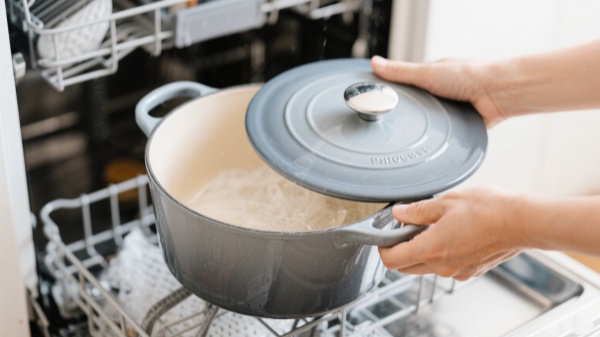
But what if you’re reading this with spotted pans staring at you accusingly? Don’t worry, most damage is fixable.
How to Fix Stainless Steel That’s Already Damaged
I’ve rescued some pretty sad-looking cookware over the years. My sister once brought me her “ruined” Calphalon set – turns out it just needed some TLC. Here’s my damage control playbook:
For rust spots: Make a paste with baking soda and water (toothpaste consistency), let it sit 15 minutes, then scrub in circles with a soft sponge. The mild abrasive lifts rust without scratching. Rinse thoroughly and dry completely.
Rainbow stains: These heat tints look worse than they are. Heat 1:3 white vinegar to water solution, soak the pan for 10-15 minutes, then wipe clean. For stubborn stains, I’ll admit to using Bar Keeper’s Friend – just don’t tell the purists.
Deep pitting: If you can catch your fingernail in the pit, it’s time for professional help or replacement. Some high-end brands like Le Creuset offer restoration services, but honestly? Deep pitting usually means the protective layer is compromised beyond home repair.
Sometimes, though, dishwashing just isn’t worth the risk. Let’s be real about which cookware deserves the hand-wash treatment.
Which Stainless Steel Cookware Must Be Hand Washed?
Through painful experience (RIP, my first All-Clad sauté pan), here’s my never-dishwash list for cookware:
- Tri-ply or 5-ply clad cookware: That aluminum or copper core can separate at the edges with repeated heat cycling. My All-Clad D3 stays far from the dishwasher.
- Hollow or wooden handles: Water infiltrates, wood cracks, hollow handles loosen. Learned this with a Wüsthof santoku – handle fell off mid-chop.
- Damascus or pattern-welded knives: The layered steel traps moisture and detergent in microscopic gaps. Plus, you paid too much to risk it.
- Copper-bottom stainless: Copper tarnishes instantly in dishwashers. Those gorgeous Mauviel pans? Hand wash only, period.
- Cheap 18/0 cookware: Ironically needs more care than expensive stuff. Low nickel content means rust city in the dishwasher.
My rule of thumb: if you’d be upset replacing it, hand wash it. Five minutes at the sink beats the heartbreak of pulling out a damaged heirloom pan.
Of course, different cookware manufacturers have different rules – and ignoring them might void your warranty.
How Do Different Brands’ Dishwasher Rules Vary?
Here’s what kills me – you’d think expensive brands would agree, but nope. I’ve collected manuals like baseball cards over the years, and the variance is wild. All-Clad explicitly marks most lines “dishwasher safe” but recommends hand washing for longevity (lawyer speak for “at your own risk”).
Scanpan goes further, actively encouraging dishwasher use for their CTX line, claiming their steel blend handles it better. Meanwhile, Le Creuset’s stainless collection comes with warnings about handle loosening in dishwashers – found that out after contacting customer service about my wobbly soup pot.
Budget brands like IKEA are surprisingly chill about dishwashers, probably because they expect shorter lifespans anyway. But specialty manufacturers – think Japanese knife makers or boutique European brands – almost universally say hand wash only.
The pattern I’ve noticed? American brands tend toward “dishwasher safe with caveats,” European brands hedge their bets, and Asian manufacturers generally say no way. When in doubt, photograph the care label before first use – saved me during a warranty claim with Cuisinart.
The Bottom Line
After all this, here’s my take: dishwashing stainless steel isn’t the cardinal sin some make it out to be, but it’s not a free-for-all either. Know your steel grades (18/8 and up for dishwashers), master the basics (pre-rinse, gentle detergent, immediate drying), and respect the exceptions (tri-ply, knives, anything irreplaceable).
Will dishwashing shorten your cookware’s life? Probably by a bit. Is hand washing everything realistic for busy people? Absolutely not. Find your balance – maybe dishwash daily drivers and baby your special pieces. Your kitchen, your rules.
Got dishwasher disasters or success stories? Drop them in the comments. We’re all learning here, and your weird rainbow stain might save someone else’s favorite pan.

Solamex — Wholesale Pots and Pans Expertise
Solamex offers wholesale pots and pans, combining durable materials, precise craftsmanship, and flexible product customization. From premium stainless steel to advanced nonstick lines, our catalog is built for both retail distribution and demanding commercial kitchens — ensuring consistency in performance and presentation.
Anodized vs Ceramic Cookware — Which Should You Buy?
Can Stainless Steel Go in the Dishwasher?