Best Pot for Deep Frying: Your Complete Guide to Crispy, Safe Results
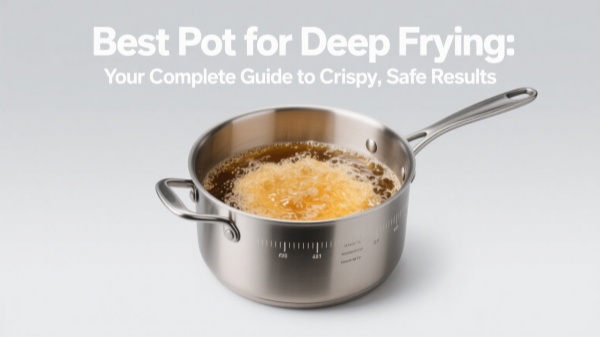
Deep frying at home can transform everyday ingredients into crispy delights—think French fries that rival your favorite takeout and chicken wings with that coveted golden crunch. But achieving consistent, restaurant‑quality results starts with selecting the right pot. The ideal vessel maintains a steady oil temperature, minimizes dangerous splatter, and simplifies cleanup. In this guide, we’ll break down the critical features you need, explore the leading pot types, share pro frying techniques, and answer the most common deep‑frying questions so you can fry with confidence.
1. What Makes a Good Deep‑Frying Pot?
Before shopping, it’s vital to understand the four core attributes every deep‑frying pot must deliver. These qualities ensure safety, efficiency, and top‑notch texture in your fried foods.
1.1 Material
Cast Iron: Renowned for unbeatable heat retention, cast iron holds temperature steady even when you add cold food. This stability prevents oil from dropping too low, which can lead to soggy, greasy results.
Stainless Steel: Durable and non‑reactive, stainless steel heats evenly when it’s heavy‑gauge or clad with an aluminum core. It’s lighter than cast iron and often dishwasher‑safe. However, budget models can develop hot spots, so thicker walls are preferable.
Aluminum: Extremely responsive to heat and lightweight, aluminum pots heat up quickly but lose temperature more easily under load. They’re an affordable entry point, but require vigilant temperature monitoring to avoid oil breakdown and off‑flavors.
1.2 Size & Depth
Depth is crucial: a pot at least 3–4 inches (7–10 cm) deep lets you add enough oil to submerge food without risking overflow. Filling no more than half full provides room for bubbling oil and prevents dangerous spills. Consider your typical batch size—if you fry large quantities, a 6–8 quart pot is ideal; for occasional small batches, a 4–5 quart will suffice.
1.3 Shape & Design
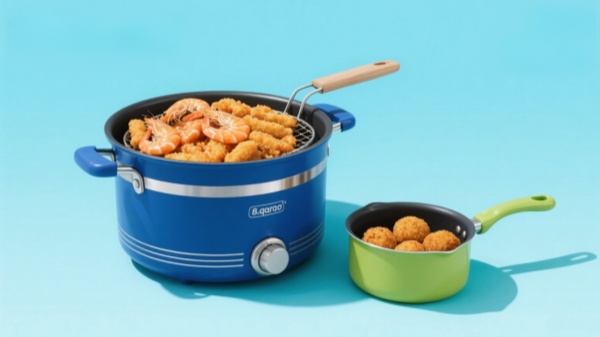
Tall, straight sides are best for splatter control, while a wide base promotes even heat distribution. Look for sturdy, heat‑resistant handles and a snug lid in case you need to smother a flare‑up. Some pots include built‑in notches for clip‑on thermometers, keeping temperature checks hands‑free.
1.4 Heat Retention & Distribution
Maintaining a stable oil temperature (ideally 360–375 °F / 182–190 °C) is essential for crispy, non‑greasy results. Cast iron leads the pack in retention; stainless steel and aluminum require more active monitoring but heat up faster. Prioritize a balance between rapid heating and temperature consistency.
1.5 Safety Features
Safety should never be an afterthought. Select pots with wide, flat bottoms for stability and handles that stay cool. If your pot has thermometer notches or a rack to clip on a probe, you’ll avoid guessing oil temperature and reduce risk of burns or fires.
2. Deep‑Frying Pot Categories: Pros, Cons & When to Pick Each
With essential criteria defined, let’s compare the top pot types so you can choose the one that best fits your cooking habits and kitchen setup.
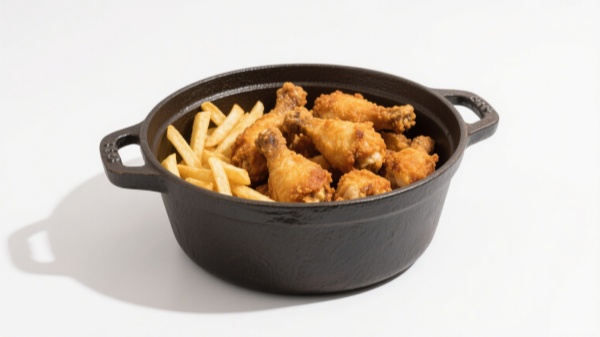
2.1 Cast Iron Dutch Oven
- Pros: Unmatched heat retention; large capacity for batch frying.
- Cons: Heaviest option; requires regular seasoning and care.
- Ideal Use: Frequent fryers making wings, doughnuts, or larger batches.
2.2 Enameled Cast Iron Pot
- Pros: No seasoning required; non‑reactive surface resists staining and odors.
- Cons: Still heavy; enamel can chip if knocked or overheated.
- Ideal Use: Frying acidic‑marinated foods and recipes where easy cleanup is a priority.
2.3 Stainless Steel Fry Pot
- Pros: Durable, lighter than cast iron, often dishwasher‑safe.
- Cons: Thinner models may develop hot spots; moderate heat retention.
- Ideal Use: Small‑batch frying and multipurpose cooking in busy home kitchens.
2.4 Carbon Steel Wok
- Pros: Rapid heating; sloped sides reduce oil usage and splatter.
- Cons: Requires seasoning; limited oil capacity for large batches.
- Ideal Use: Versatile kitchens that switch between stir‑fry and small‑batch frying.
2.5 Integrated Basket Fryer Pot
- Pros: Comes with a basket for easy draining; user‑friendly for beginners.
- Cons: Typically higher price; basket size may restrict batch volume.
- Ideal Use: First-time fryers and those seeking convenience over versatility.
3. Choosing the Perfect Pot for Your Kitchen
Selecting the right pot isn’t one‑size‑fits‑all. Match these factors to your kitchen and habits:
- Batch Size & Storage: Large Dutch ovens need ample cabinet space; woks and aluminum pots nest neatly.
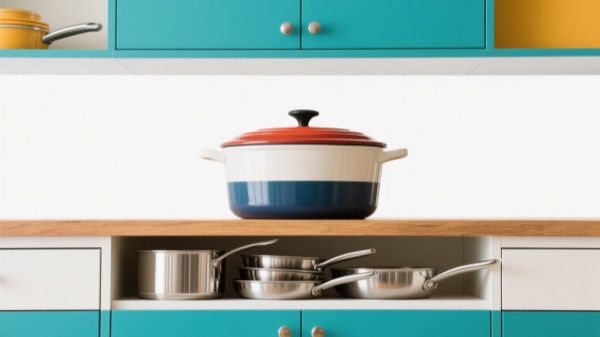
- Budget vs. Longevity: Cast iron is a long‑term investment; aluminum works as a starter piece.
- Maintenance: Enamel and stainless steel simplify care; bare cast iron demands seasoning upkeep.
- Stovetop Compatibility: Induction stoves require magnetic bases—cast iron and most stainless steel qualify.
4. Deep‑Frying Best Practices & Troubleshooting
Even the finest pot won’t guarantee perfect fries or chicken if your technique is off. Follow these steps for golden‑crisp success:
4.1 Oil Quantity & Temperature Control
Use a reliable thermometer to maintain oil between 360–375 °F (182–190 °C). Preheat oil fully before adding food, and avoid overloading the pot, which can drop temperature and produce greasy results. Re‑heat oil between batches to keep each one equally crisp.
4.2 Safety Tips
Always use long‑handled tools to lower food gently. Keep a lid nearby to smother any flare‑ups, and never leave hot oil unattended. Ensure your cooking area is clear of water or moisture—oil and water can violently react.
4.3 Cleanup & Pot Care
Allow oil to cool to lukewarm, then strain it through a fine mesh sieve for reuse or solidify and discard responsibly. Wipe pots clean with warm water and mild detergent—avoid metal scouring pads on enamel. After cleaning raw cast iron, apply a thin coat of oil to preserve its seasoning.
5. People Also Ask & Related Questions
What is the best material for a deep‑frying pot?
Cast iron remains the top choice for its heat retention and even cooking. Enameled cast iron offers the same benefits without seasoning, while stainless steel provides durability and easy care.
How much oil do I need to deep fry safely?
A depth of 2–3 inches (5–7 cm) of oil is generally sufficient. Fill your pot no more than halfway to allow space for bubbling and to prevent spills.
Can I use any pot for deep frying?
While many pots can technically hold hot oil, you need one with thick walls, tall sides, and stable handles. Thin or shallow pans can lead to unsafe splatter and inconsistent cooking.
Do I need a fryer basket?
A fryer basket makes removing and draining foods much easier, but you can also use a spider strainer or slotted spoon if your pot lacks a basket.
Conclusion & Top Picks
Your choice of pot sets the stage for perfectly crispy fries, wings, and more. For all‑around performance, a 7 quart nonstick soup pot offers unparalleled heat retention and capacity. If space or budget is limited, a sturdy 5‑quart stainless steel fry pot is a versatile alternative. Remember to monitor oil temperature, avoid overloading, and practice safe handling—and you’ll achieve golden‑crisp results every time.
Best Pot for Deep Frying Guide: Top Picks for Crispy, Golden Results
Mastering the Grill Pan: The Ultimate Indoor Grilling Guide