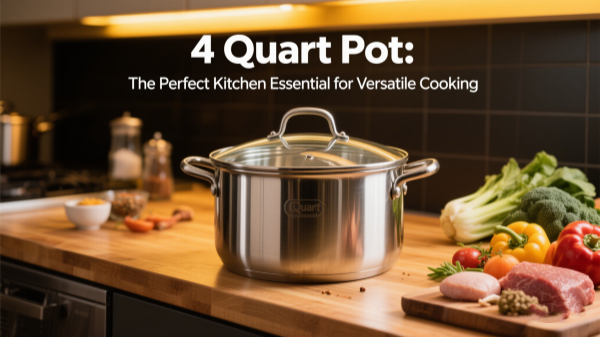
4 Quart Pot: The Perfect Kitchen Essential for Versatile Cooking
Introduction
Choosing the right pot size can elevate your cooking from “just okay” to remarkable. A pot that’s too small overflows; one that’s too big wastes energy and space. For many home cooks, the 4 quart pot strikes the perfect balance—roomy enough for soups, stews, and one‑pot meals, yet compact enough to heat quickly and tuck away in your cabinet.
In this guide, we’ll define exactly what “4 quart” means, break down its true physical dimensions, explore materials and construction, suggest ideal recipes, and give you pro tips on choosing and caring for your cookware. By the end, you’ll see why the 4 qt is the Goldilocks of pots.
What Is a 4 Quart Pot?
In the U.S., a quart is a liquid volume equal to approximately 0.946 liters. Thus, a 4 quart pot holds about 3.79 liters. Though the metric system is gaining ground, “quart” labels endure in American kitchens, where recipes often call for quarts of stock or water.
Knowing the volume is one thing—actually picturing it is another. Let’s translate quarts into inches and centimeters next.
How Big Is a 4 Quart Pot?
1. Capacity Comparison
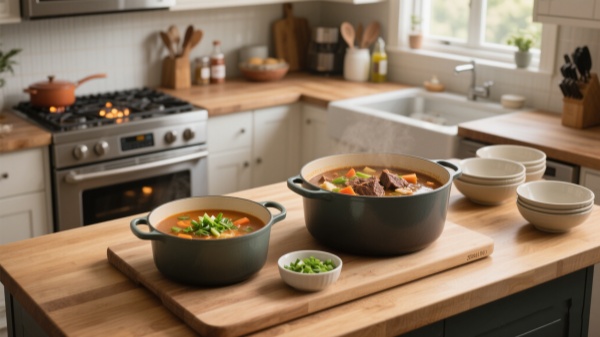
How big is a 4 quart pot? A 4 quart pot holds:
- About 8 cups of liquid.
- Roughly 1.5 pounds (680 g) of dry pasta.
By contrast:
- A 2 quart pot (~1.9 L) is ideal for single‑serve or small soup batches.
- An 8 quart pot (~7.6 L) handles large family gatherings or bulk batch‑cooking.
2. Physical Dimensions
Most 4 quart pots measure in these ranges:
- Diameter: 8.5–10 inches (21.5–25.4 cm).
- Height (without lid): 4.5–5.5 inches (11.4–14 cm).
- Wall thickness: 1.2–2.5 mm—affecting both inner volume and heat retention.
3. Visual & Everyday Analogies
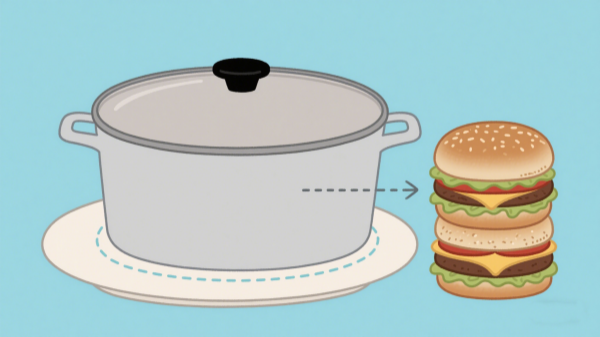
Picture a standard dinner plate: that’s roughly the footprint of a 4 quart pot’s base. Stack two burgers high—that’s nearly the pot’s height. When empty, it weighs around 2–3 lb (0.9–1.4 kg); filled with water, it can tip the scales at nearly 12 lb (5.4 kg).
4. Measuring Your Own Pot
Use a soft tape measure or ruler to check the inside diameter and height. Don’t forget: handles and lids add extra width and height, slightly reducing cabinet clearance.
Materials & Construction
The material of your pot dictates how quickly it heats, how evenly it cooks, and how long it lasts. Here’s a quick look:
| Material | Pros | Cons | Best For |
|---|---|---|---|
| Stainless Steel (3‑ply / 5‑ply) | Durable, non‑reactive, even heating | Can stick; pricier | Sauces, searing, everyday use |
| Enameled Cast Iron | Excellent heat retention, non‑reactive | Heavy; slow to heat | Stews, braises, long simmers |
| Aluminum Core / Nonstick | Lightweight, easy cleanup | Coating can wear; less durable | Eggs, delicate sauces, low‑fat cooking |
Each has its place—think through your cooking style before investing in premium vs. budget lines.
Ideal Uses & Recipes
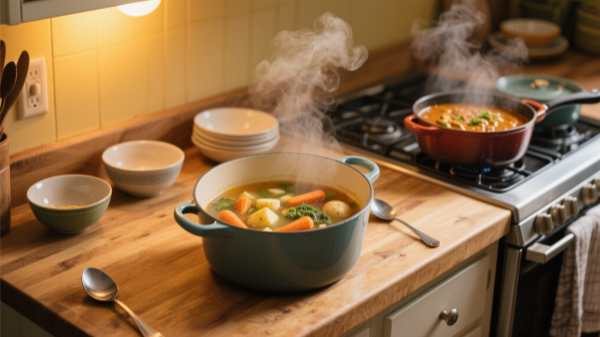
The 4 quart pot is your go‑to for:
- Boiling pasta or grains (serves ~3–4).
- Simmering soups, stews, and sauces.
- One‑pot meals—think chili, curries, or risotto.
Special techniques:
- Blanching: Quickly scald veggies before shocking in ice water.
- Poaching: Gentle cooking of eggs, fish, or fruit.
- Melting: Chocolate or butter without burning.
If you need smaller batches, reach for a 2 quart pot; for large gatherings, an 8 quart pot is your friend.
Advantages of the 4 Quart Size
Quick to heat: Less volume than an 8 quart pot means faster boil times and lower energy use.
Versatile capacity: More room than a 2 quart pot without being unwieldy.
Fits most burners: Balances nicely on standard stovetop rings and slides easily into ovens up to 500°F.
Easy storage: Moderate size nests well with other pots and pans.
Buying Guide & Key Features
When you’re ready to purchase, keep these in mind:
- Construction: Look for at least a 3‑ply base; 5‑ply is ideal for pro‑level heat control.
- Handles: Stay‑cool grips or riveted loops for balanced lifting.
- Lid: A snug, heavy lid traps moisture and heat.
- Warranty: Many premium brands (All‑Clad, Made In) offer lifetime coverage.
For occasional use, reliable budget brands will suffice; for daily cooks, consider investing in a top‑tier line.
Maintenance & Care
To keep your 4 quart pot in top shape:
- Hand‑wash: Prefer gentle dish soap and soft sponge; even “dishwasher‑safe” stainless steel fares better by hand.
- Stubborn stains: Make a paste of baking soda and water; apply, let sit, then gently scrub.
- Storage: Nest pots carefully or hang by handles to save space.
- Replace when: You see warping, cracks in nonstick, or loose handles.
Conclusion
The 4 quart pot truly is the “Goldilocks” of cookware—just right for everyday meals, family dinners, and creative one‑pot experiments. From its balanced capacity and versatile dimensions to its quick heating and easy storage, it’s no wonder this size remains a kitchen staple.
Whether you’re simmering soup, boiling pasta, or perfecting a risotto, let your 4 qt pot be your trusty sidekick. Ready to put yours to work? What will you cook first?
4 Quart Pot Mastery: Sizes, Materials & Recipes for Every Kitchen
Ceramic vs Stainless Steel Cookware: Health, Durability & Cooking Performance Compared